TIMELINE
6 Months
TITLE
Experience Designer
TEAM
Just me
TOOLS
Figma
FigJam
Figma Make
Adobe Illustrator
Adobe Premier Pro
3D Printing
CONTEXT
Getting tickets to live shows has become quite an obstacle to fans, making access to live music feel more tied to money and luck rather than devotion and artist appreciation.
As both a music fan and a designer, I wanted to interrogate this space and see if things could, or should, change.
THE PROCESS
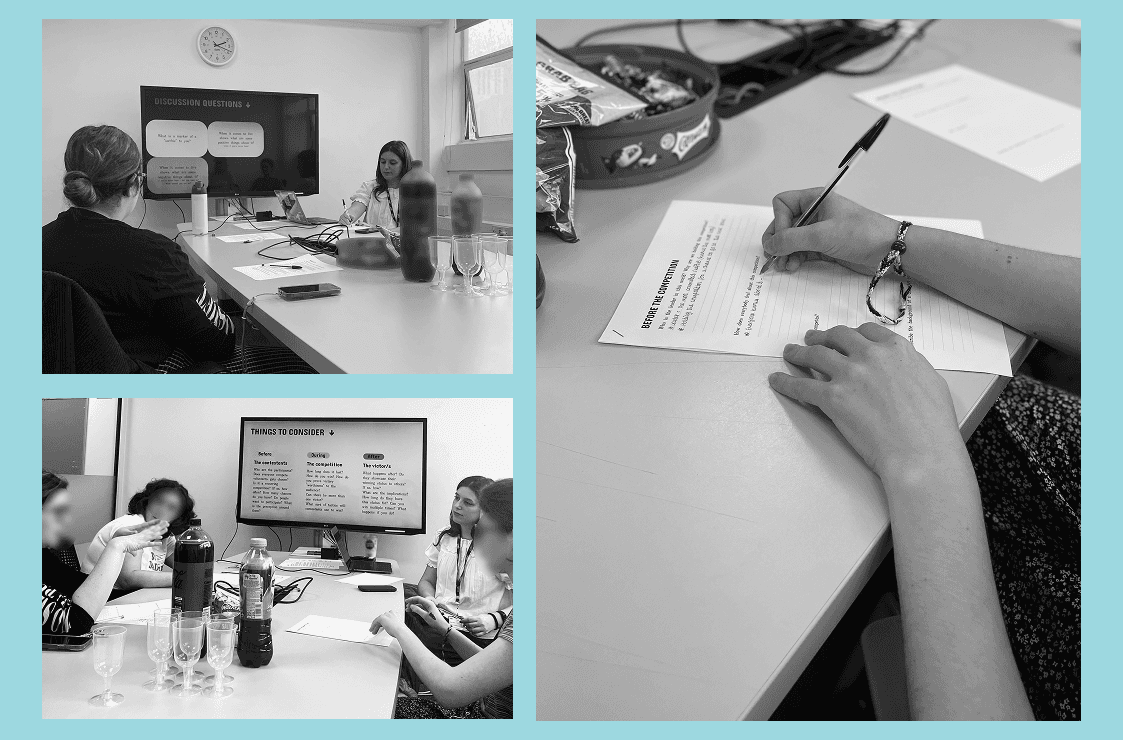
The Workshop
Fans have a strong self-belief that they'd get in if the system was truly merit-based. Exclusion stings, but what makes it worse is feeling like the wrong people got in instead.
No matter how fair the system, exclusion is structurally inevitable: venues have a finite capacity, and crowd safety regulations mean we can't just let everyone in. The question is then "who do we include?" which turns into "who gets to decide?"
Fan verification already exists in some form today, but
pre-registering your email or buying from the merch store doesn't prove you're a fan. It proves you have an inbox and a credit card.
The LARP
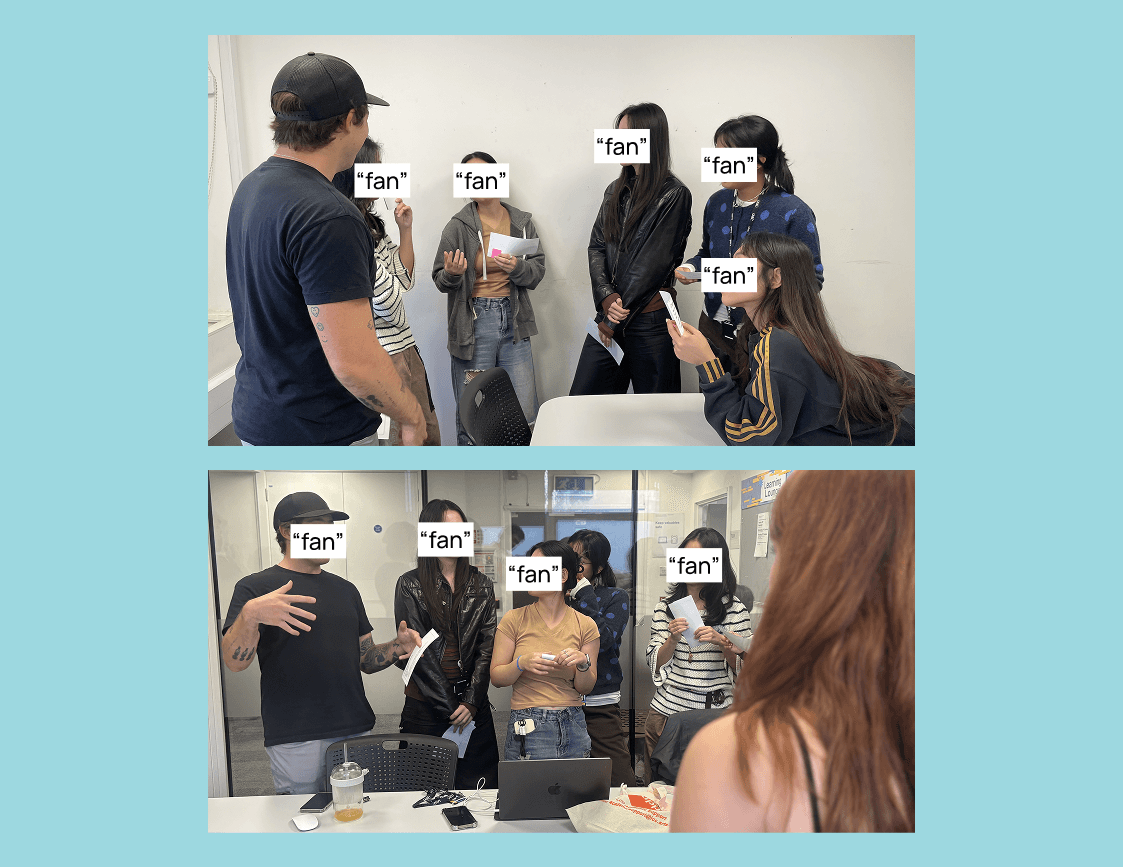
I created 6 fan characters and allocated live show tickets arbitrarily to see how they react. Chaos ensued, and the group ended up collaborating together to storm the gates.
It reinforced the idea that blame turns towards the system rather than individuals if they deem it unfair.
Deus ex machi…not
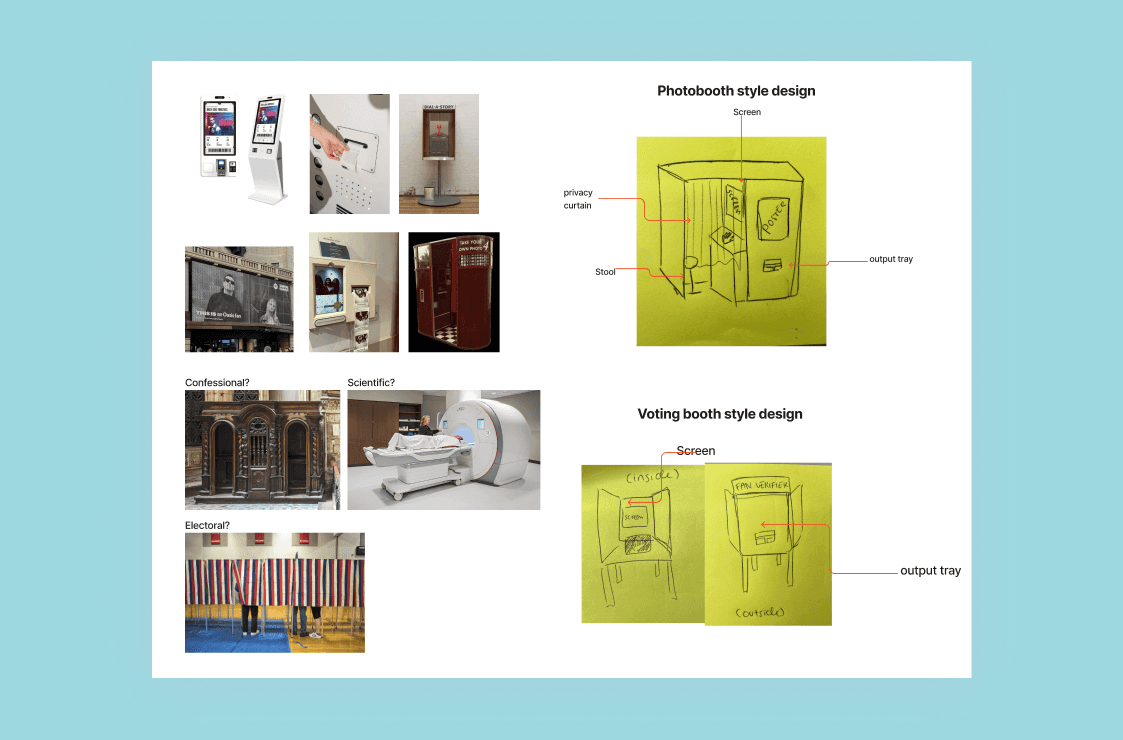
Inspired by stadium turnstiles, I conceptualised a machine that grants access based on fan behaviour, rewarding the sweet spot of genuine fandom and not financial excess. The goal was to highlight the rigidity of the current ticketing system.
But devotion is emotional and therefore very human.
A machine can't assess what it can't feel, and fans frustration with the automated system was already well-documented.
So I pivoted back to humans.
The Interrogations
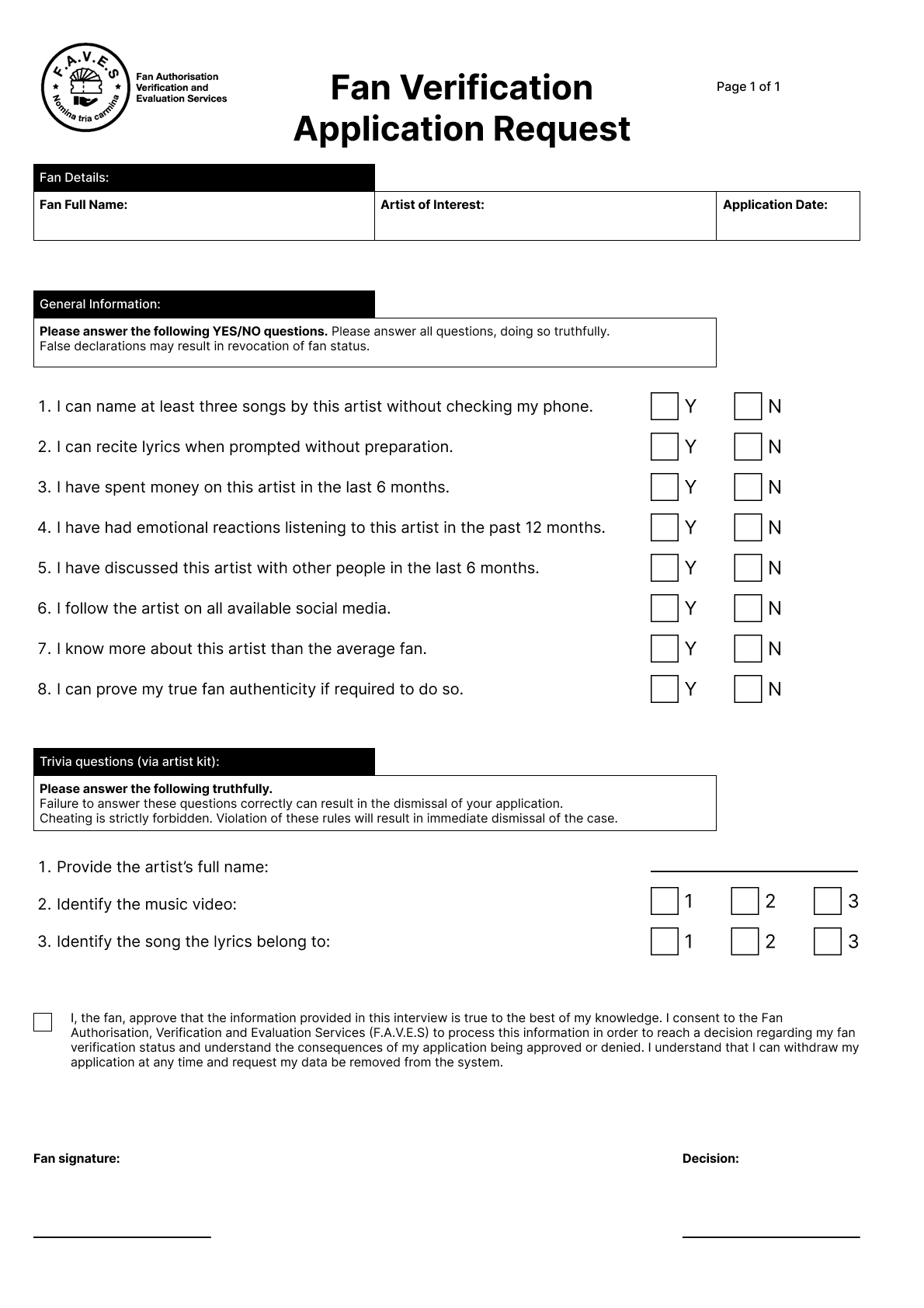
When we can't measure love, we invented bureaucratic metrics for it, like in the spouse visa process. This was my inspiration behind a service dedicated to fan verification.
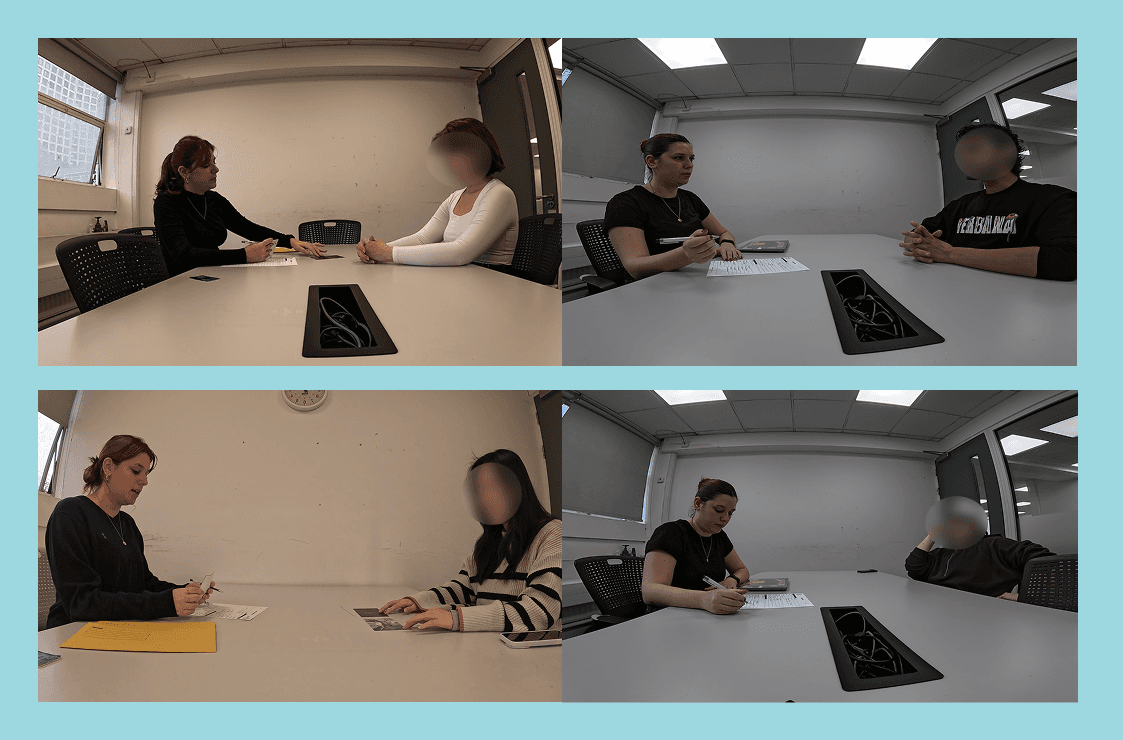
I LARPed as an officer from this fictional service, interrogating 11 people about their fanship.
Nobody questioned my authority to do it, nor the questions I chose to assess them with. They got nervous, and some started doubting themselves as fans.
THE BOTTOM LINE
Fans trusted the bureaucratic system I created and turned their criticism inwards, questioning their own fanship rather than the process judging it.
Now… how do I communicate that with a final design for an exhibition?
THE DESIGN
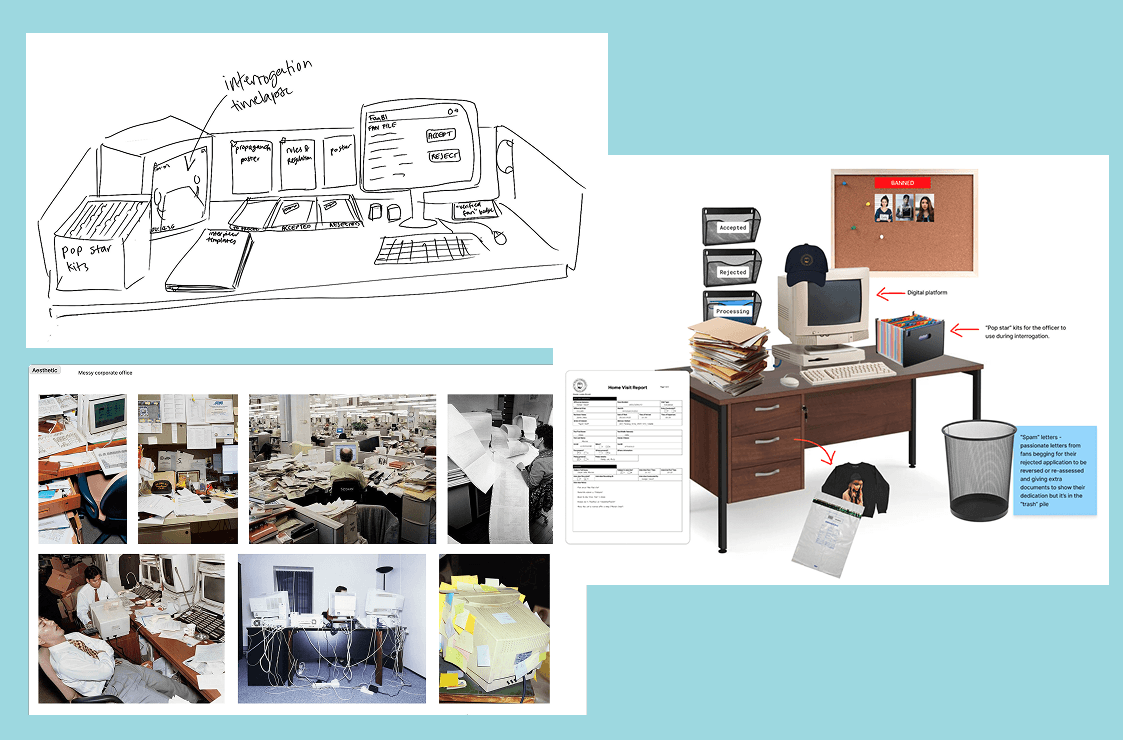
Designing the desk
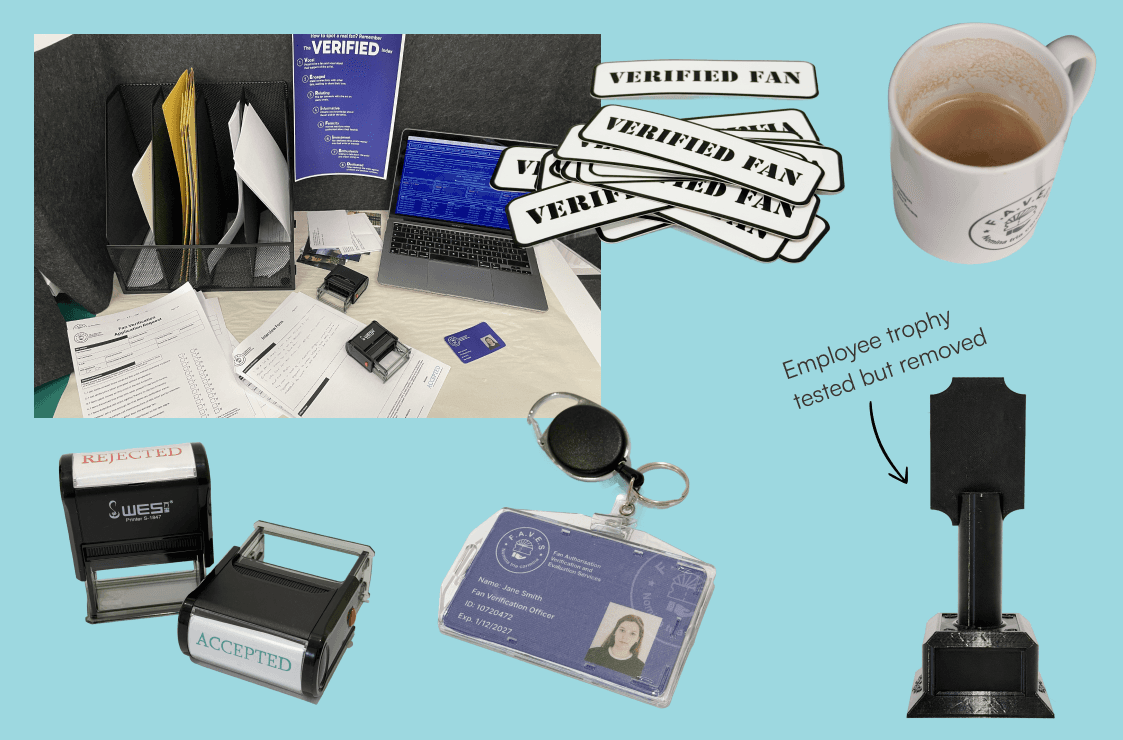
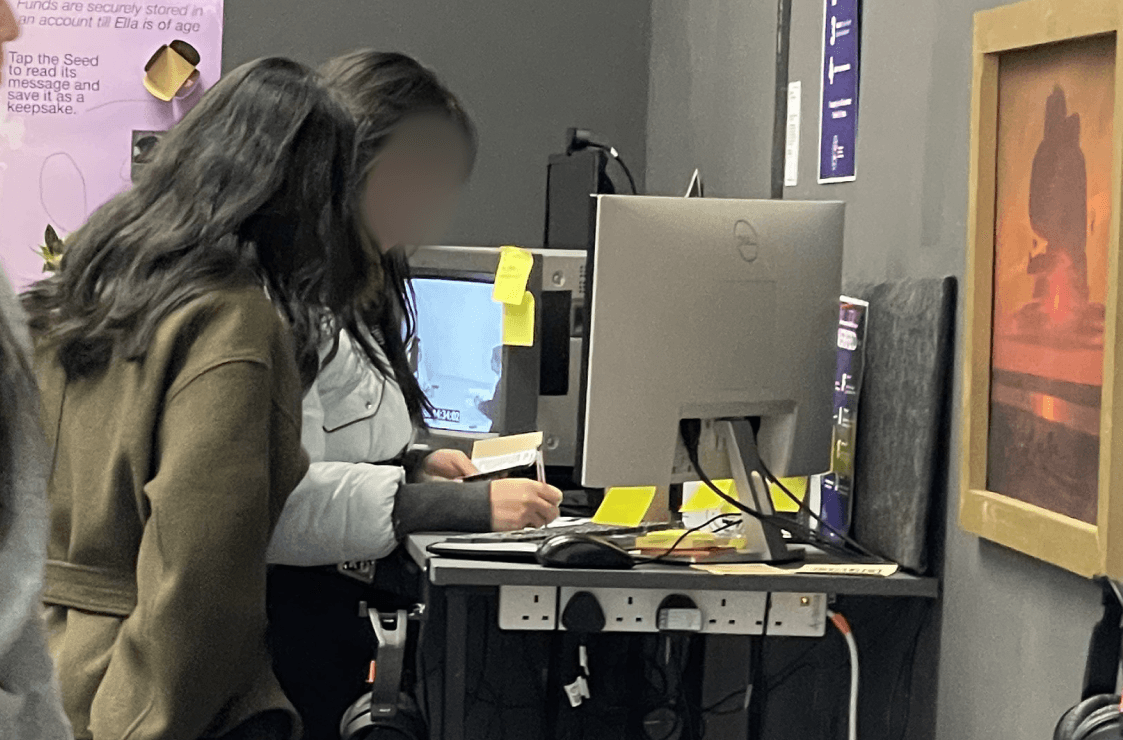
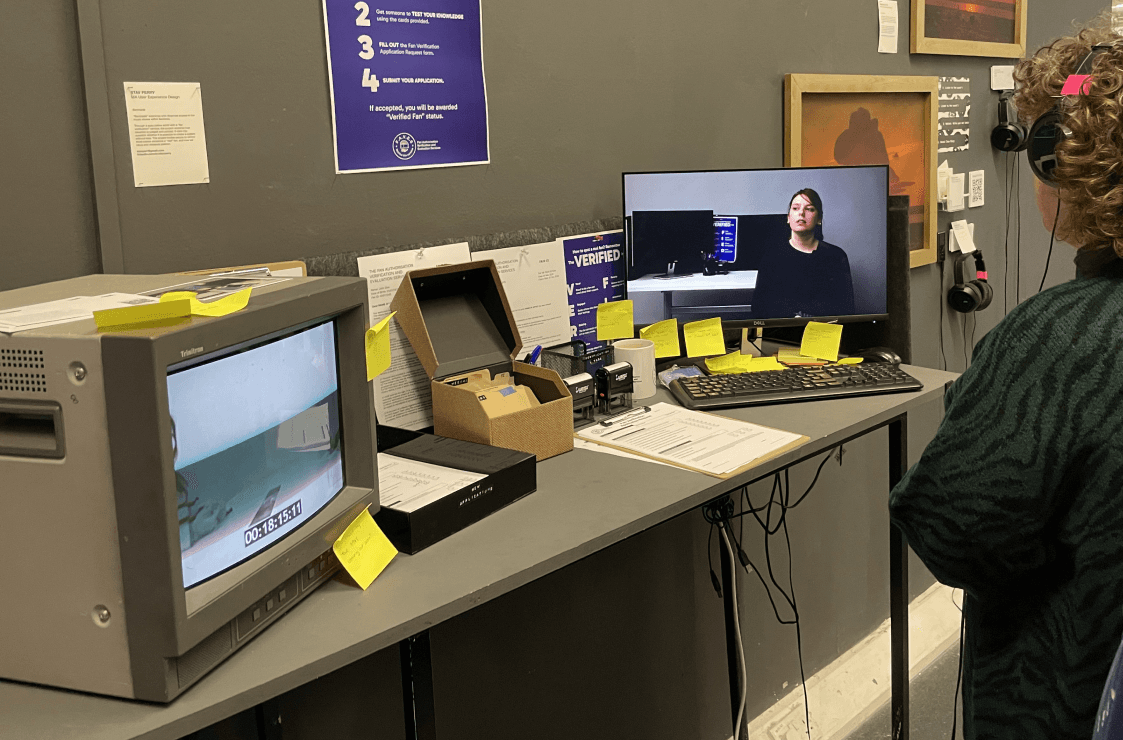
The goal for this desk design was to communicate the story, and be inviting enough to encourage participation. Several artefacts were planned and removed because they were too confusing or obstructed attention.
Fun fact: people LOVE stamps.
The Officer's Desk
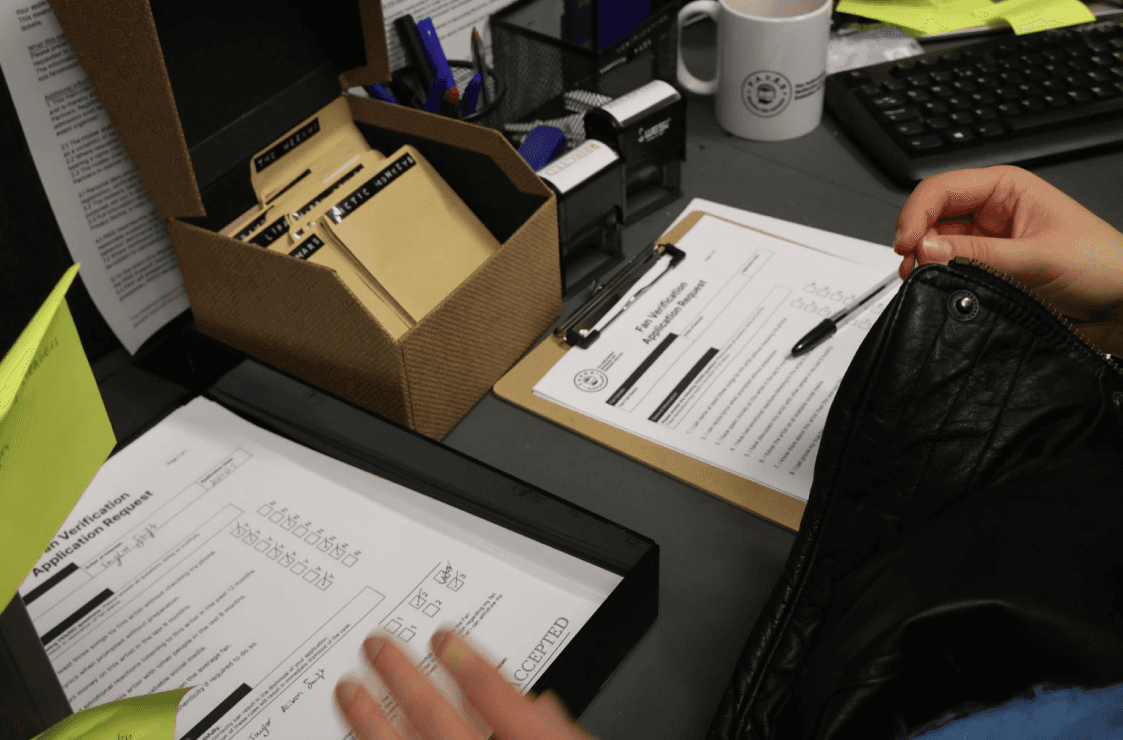
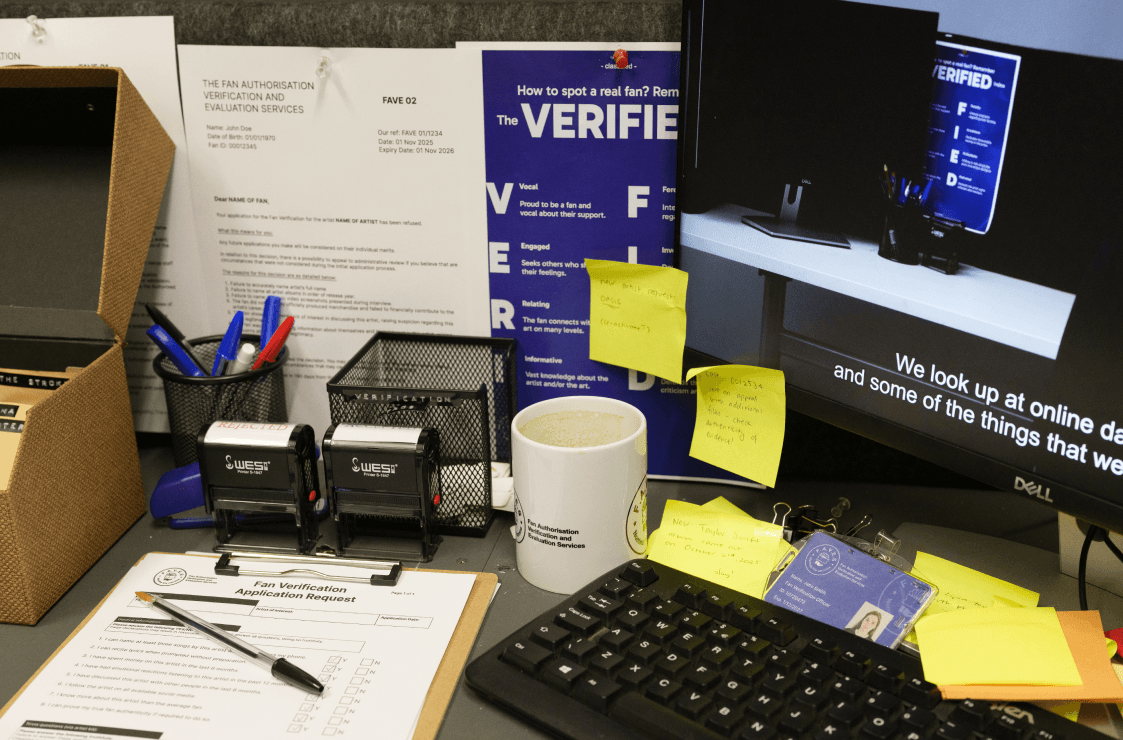
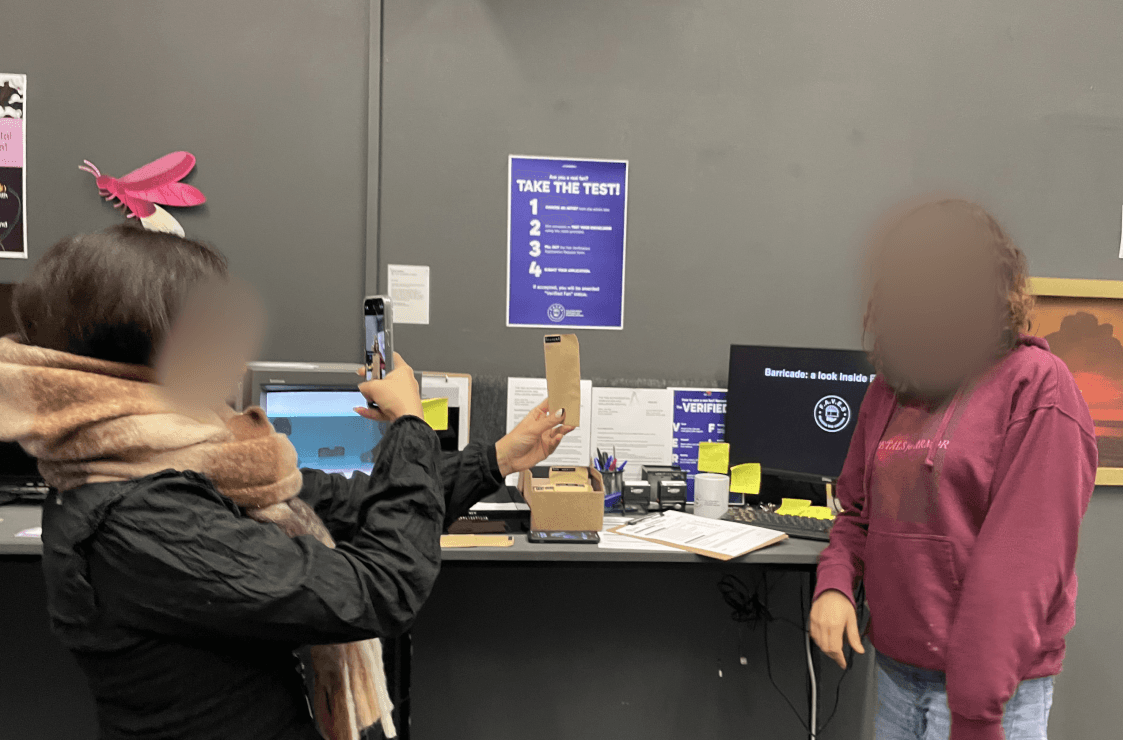
Mundane, bureaucratic and tedious - every object was chosen to reinforce that assessing fans is just another day in the office for this officer, drowning in paperwork. It's detached from emotion and therefore was perceived as bias-free and clinical.
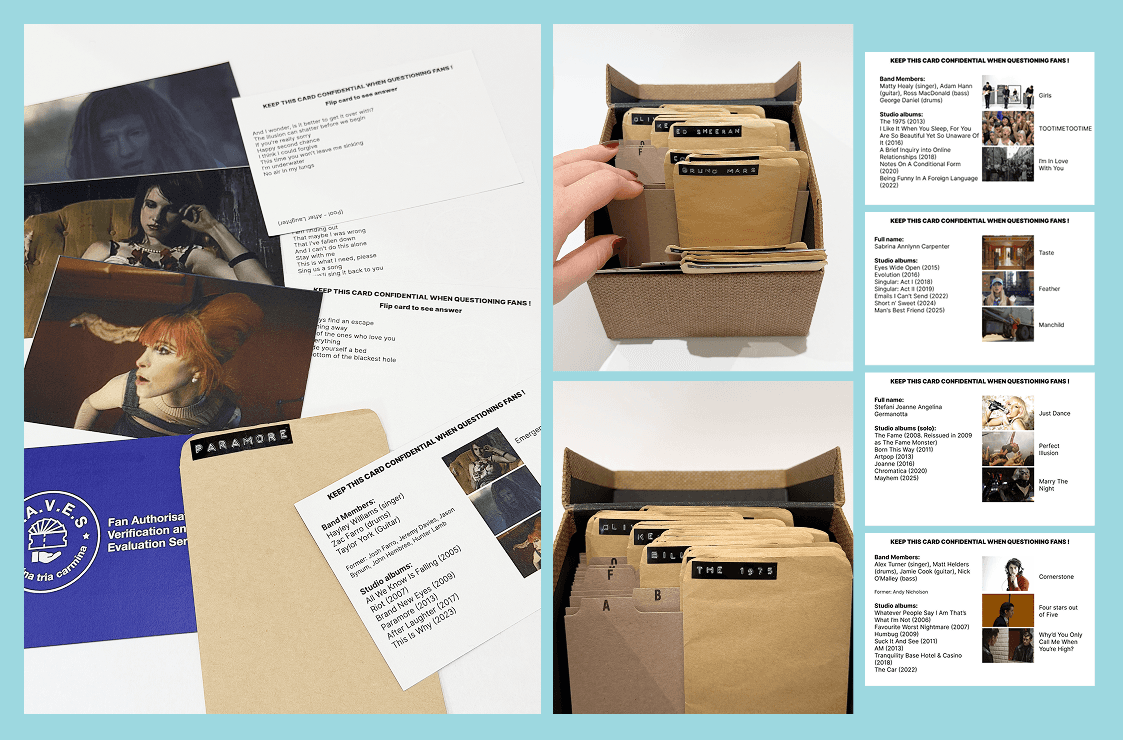
The Artists Kits
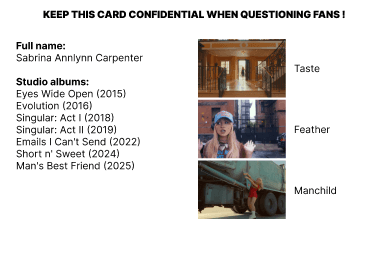
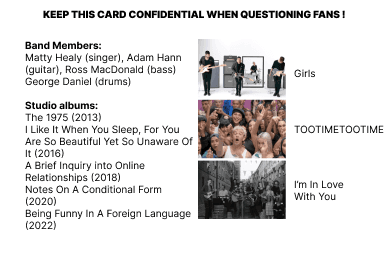
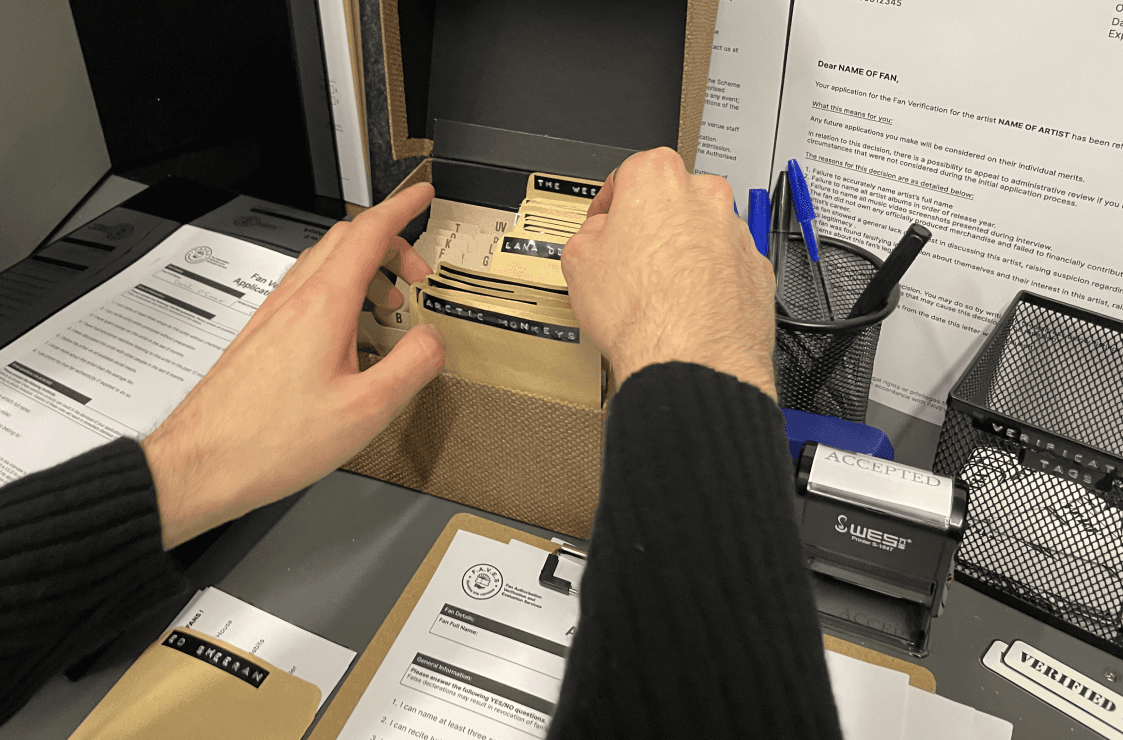
To avoid fan-on-fan bias, the officers are not fans themselves. Instead, they rely on a "cheat sheet" that includes information every fan should know, like album names and music videos.
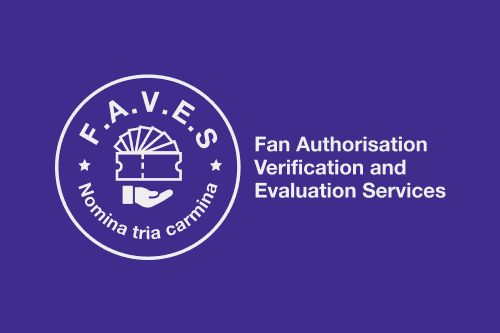
This was inspired by the "can you even name 3 songs" phenomenon (The logo even says it in Latin).
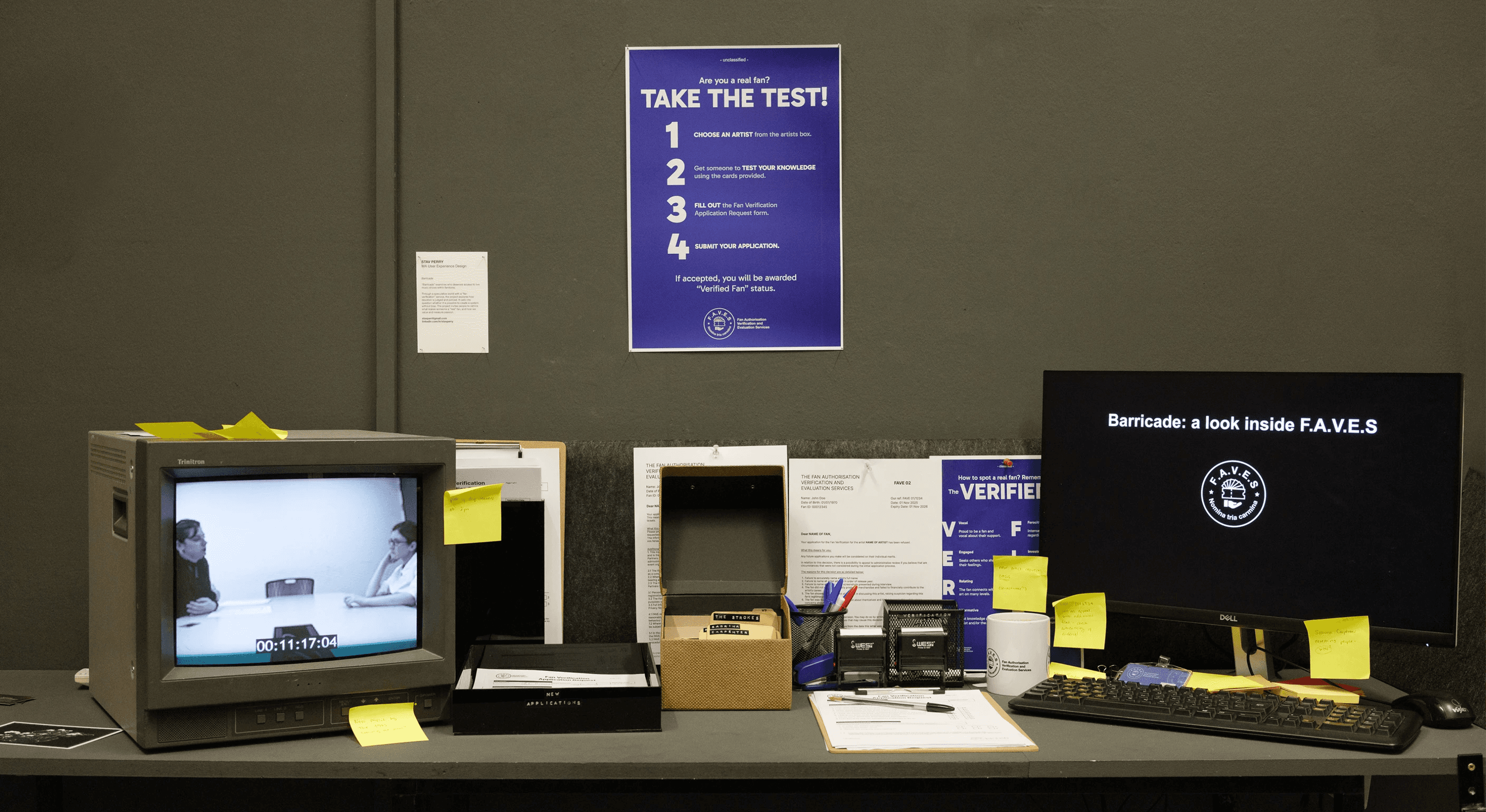
PUTTING IT ALL TOGETHER
THE OUTCOME
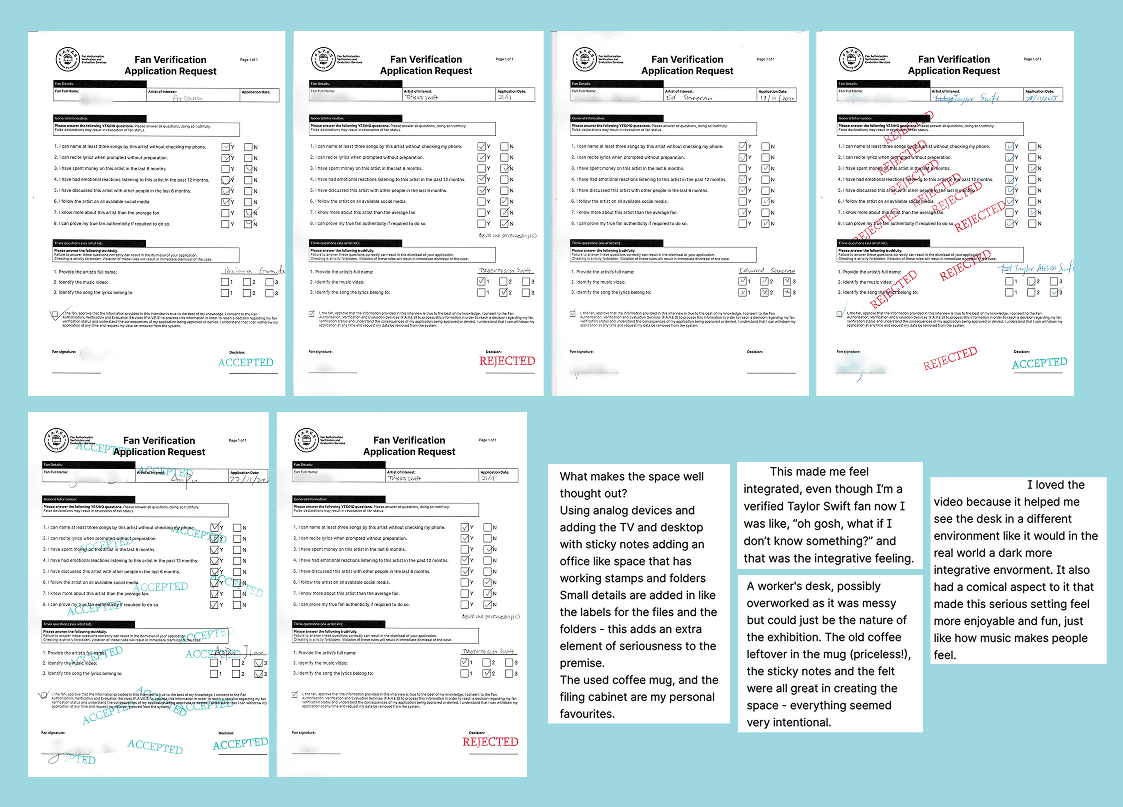
47 new fan submissions were received in the 3 days the installation was available to the public.
Whilst the fans who successfully "passed" the test were content with the system, those who "failed" said they were now questioning their own fan identity and worthiness, implying they don't perceive the system itself to be flawed, but themselves.
More projects